
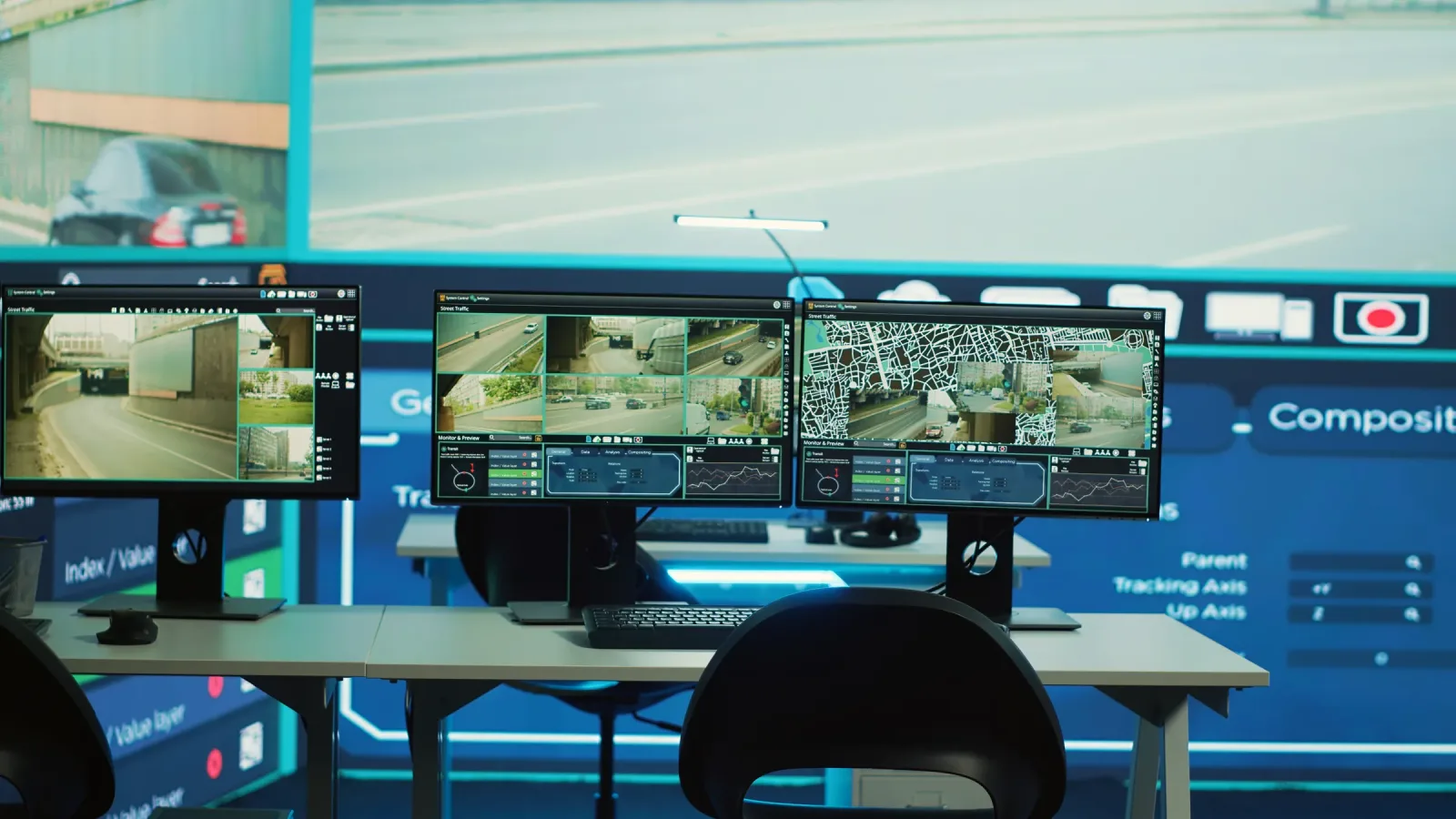
The main difference between IP and analog CCTV is how the cameras send video. Analog (HD coaxial) cameras send video over coaxial cable to a DVR, while IP cameras send digital video over network cable to an NVR, usually with power on the same cable (PoE). Analog is generally cheaper and simpler for small sites; IP gives sharper images, smarter features and easier expansion, so it suits larger properties and businesses.
Both can work well. The right choice depends on your property, your budget and what you need the footage to show. This guide compares IP vs analog CCTV side by side so you can decide with confidence.
IP vs analog CCTV at a glance
Here is a quick side-by-side comparison of the two technologies.
Analog (HD coaxial) CCTV
- Recorder: DVR (digital video recorder)
- Cable: coaxial cable for video, plus a separate power cable or a combined "Siamese" cable
- Typical resolution: 2MP to 5MP, with some 8MP models
- Power: usually a central power supply box feeding each camera
- Smart features: basic motion detection; some newer models add simple human and vehicle detection
- Expansion: limited by DVR channels; adding cameras beyond that needs a new recorder
- Upfront cost: lower
IP CCTV
- Recorder: NVR (network video recorder)
- Cable: network cable (Cat6 is common), carrying both data and power with PoE
- Typical resolution: 2MP to 8MP (4K) and higher
- Power: PoE from the NVR or a PoE switch, so one cable per camera
- Smart features: stronger analytics on many models, such as line crossing, intrusion zones, face capture and number plate capture on suitable cameras
- Expansion: flexible; cameras can be added through network switches, including on other buildings over a network link
- Upfront cost: higher
Image quality: which gives clearer footage?
Image quality is usually the deciding factor, because a camera is only useful if you can identify a face, a vehicle or what happened.
Modern analog HD cameras are far better than the grainy CCTV of the past. A good 2MP or 5MP analog camera gives clear footage for most homes, especially for a gate, a door or a parking area at moderate distance.
IP cameras generally go further. Higher resolutions, better image processing and, on many models, stronger low-light performance make it easier to zoom into recorded footage without it breaking up. If you need to read number plates, see faces across a large compound or cover a wide area with fewer cameras, IP has the advantage.
Whatever you choose, placement, lens choice and lighting matter as much as resolution. A well-positioned 2MP camera often beats a poorly placed 8MP one.
Cabling: coax vs network cable and PoE
Cabling affects cost, neatness and reliability, and it is hard to change once walls are finished.
Analog cabling
- Uses coaxial cable for video and a separate pair for power, or a combined cable.
- Handles reasonably long runs, which helps on wide compounds.
- Very common, so existing analog cabling can sometimes be reused when upgrading to newer analog HD cameras.
IP cabling and PoE
- One network cable per camera carries video and power (PoE), so there is no separate power supply at each camera.
- A single network cable run is typically limited to about 100 metres; longer distances need a switch, extender or fibre link.
- Uses the same type of cabling as office networks, which makes it easy to integrate with other systems.
For an existing building with old coax already in the walls, analog can be the less disruptive upgrade. For a new build or a major renovation, running network cable is usually the better long-term choice.
Scalability: planning for more cameras later
Think about where your property will be in a few years. Will you add a second gate, a new block of rentals or a warehouse?
- Analog: works well when the number of cameras is fixed. Once the DVR is full, you need a larger recorder.
- IP: scales more easily. You can add PoE switches, link cameras on separate buildings over the network and grow to larger systems managed from one interface.
Schools, churches, clinics, apartment blocks and businesses that expect to grow usually benefit from IP from the start.
Cost: what to expect
Analog systems usually cost less upfront because the cameras and DVRs are cheaper. IP cameras, NVRs and PoE switches cost more, although the gap has narrowed over the years.
Total cost also depends on storage, cable distance, poles, power backup and labour. For indicative 2026 ranges by number of cameras, see our guide How Much Does CCTV Installation Cost in Kenya? Prices always depend on the site, so confirm them with a free site survey.
When analog CCTV makes sense
- A standalone home or small shop needing 2 to 8 cameras.
- A tight budget where clear daytime and reasonable night footage is enough.
- Upgrading an older system where good coaxial cabling is already in place.
- Simple needs: covering the gate, doors and parking without advanced analytics.
When IP CCTV makes sense
- Larger properties, apartment blocks, offices, institutions and warehouses.
- Where you need to identify faces or read number plates reliably.
- New builds, where network cabling can be planned in from the start.
- Sites likely to expand, or with several buildings to link together.
- When you want smart alerts, such as intrusion zones or line crossing, sent to your phone.
Things that matter regardless of the technology
- Genuine equipment: well-known brands such as Hikvision or Dahua offer both analog and IP ranges; avoid unbranded or fake units.
- Enough storage: size the hard disk for the number of days you need to keep footage.
- Power backup: a UPS keeps the recorder and cameras running during short blackouts.
- Secure remote access: change default passwords and keep firmware updated. See how to view your CCTV cameras on your phone.
- Neat, protected cabling: conduit or trunking protects cables from sun, rain and tampering.
Key takeaways
- Analog uses coax and a DVR; IP uses network cable, PoE and an NVR.
- Analog is cheaper and simpler for small, fixed systems.
- IP offers sharper footage, smarter features and easier growth, at a higher upfront cost.
- Existing coax can make analog a practical upgrade; new builds favour IP.
- Placement, storage, power backup and security matter as much as the technology.
Choosing the right CCTV system for your property
If you are unsure whether IP or analog suits your home, rental block or business, the quickest answer comes from looking at the site: distances, lighting, existing cabling and what you need to see. Nerpax Systems supplies, installs and commissions both analog and IP systems across Nairobi, Kiambu, Kajiado, Machakos, Murang'a, Nyeri and Nakuru.
Learn more on our CCTV systems page, compare ready-made CCTV packages, or work through our home security checklist. When you are ready, book a site visit or request a free quote.